Raising Her Game
A docuseries about the 2023 University of Texas women’s soccer team with a deep dive into the sport and its Title IX-fueled history and ethos.
 1:03:41
Ep1: Talent Only Gets You So Far
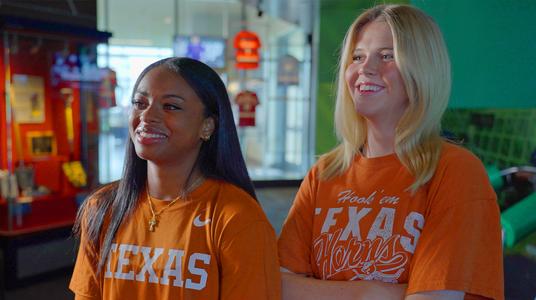
The United Soccer Coaches organization recognizes University of Texas soccer player Lexi Missimo as an All-American. We discover that she plays for a coach in Ange Kelly who wants her players to fail, so they can learn from it and become better players and people. Lexi comes from a soccer family and we explore how her parents excelled in college but lacked opportunities to play beyond that level, and we find out why as we visit the National Soccer Hall of Fame with Lexi and her best friend, teammate, and fellow All-American, Trinity Byars. We also learn that Lexi’s parents were able to provide her and her sister Gabby with chances to play soccer and grow to love the game. Lexi’s club team won multiple championships before many of the players moved on to UT . . . and promptly lost their first official college game 4-0. As the episode unfolds, we see how these freshmen overcome adversity to earn their first NCAA tournament berth, coming together as a team along the way.
 1:30:32
Ep2: Title IX Launches U.S. Soccer
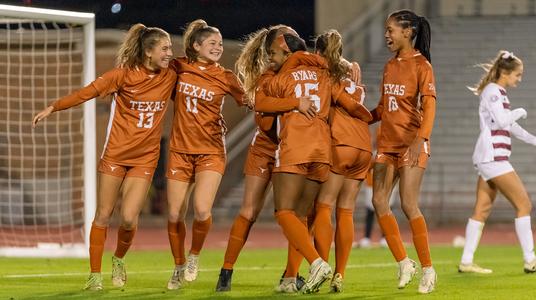
The University of Texas honor its female athletes at a football game in front of 90,000+ spectators. Today, those women’s athletic programs annually rank among the nation’s best, but learn that the situation was much different 100 years ago when a groundbreaking physical education instructor named Anna Hiss worked to establish sports programs for women. Lexi Missimo and Ashlyn Miller from the current UT soccer team tour the gymnasium Hiss got built in the 1930s. It now houses the Texas Robotics program, pointing up the way women have needed to work to achieve opportunities to participate in both athletics and STEM fields. We learn about the longstanding UT/Texas A&M rivalry and how the development of the “Texas Fight” mantra that fires up Longhorns reflects the competitive aspects of sport. Female athletes were historically viewed as incapable of handling vigorous competitive athletics, but as attitudes evolved, the embrace of legendary coach Anson Dorrance’s “competitive cauldron” proved a vital trait for successful U.S. women’s soccer teams. We discover how current Texas head coach Ange Kelly played in that atmosphere for Dorrance at North Carolina and brought that approach to head coaching stops at Tennessee and UT. The perseverance one must learn to succeed in such situations proves crucial to the mental and physical recovery of key Longhorn players from devastating injuries. Kelly can relate, as she suffered such an injury as a UNC freshman. Her teammate Mia Hamm had delivered the bad news to Kelly’s parents. We ponder how sports experiences can help fuel real-life successes, including former Longhorn players who want to pursue medical fields. Current players visit military memorials at their campus’s football stadium and we find out how, historically, the World Wars influenced the development of sports programs. We then explore how after those wars, soccer’s popularity exploded in other countries, but with women generally excluded from participation. The soccer team gets a surprise visit from Texas quarterbacks, including Quinn Ewers, and that leads us to the role football plays in financing collegiate athletic programs. Today, it can be an asset, but we find out that past generations of football people worried that the establishment of women’s athletic programs through Title IX could be a threat to their own sport’s funding. Players are surprised to find out how few resources their counterparts had to work with in the 1970s and how soccer was not a sport included in UT’s initial cohort of female sports. Despite UT’s leading role in many sports, a lack of Title IX compliance eventually resulted in legal action. We learn how female undergrads had to courageously take on their own school in a lawsuit that led the establishment of the soccer program in the 1990s. By the end of the episode, we come to know that the precedent UT set influenced many other schools to set up programs and how that supplied the USWNT an advantage over countries that lacked the influence of Title IX.
 1:35:28
Ep3: Winning Time For Women’s Soccer
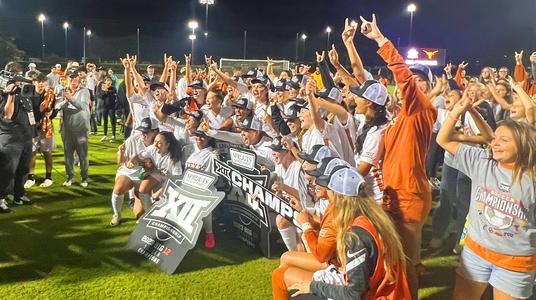
As this episode of Raising Her Game opens, Texas Longhorns Head Soccer Coach Ange Kelly describes Dr. Kelly McDonald Freeman to her team as someone “has done everything I’d dream for all of you to do.” As the episode unfolds, we learn that she’s referencing a lot more than soccer. After we learn that McDonald Freeman was inducted into the Texas Athletic Hall of Fame, we flash back to 2022, when Texas won a rivalry game with Texas A&M to advance in the NCAA Tournament, only to lose out to national power Duke in the second round. Despite the loss, historical perspective kicks in as we realize that Texas was not a contender to even make the tournament in the early days – until McDonald Freeman and some high-profile teammates joined the program and led it to its first NCAA berths. But despite her All-American credentials, McDonald Freeman had almost no options to play at a high level after college. She became a successful dentist – a career path admired by Ange Kelly and a superb result for a university athlete. We explore the player pathway to college and pro soccer as it has evolved into the present day, including the challenges and choices for youth players. We also confront the compensation issue, including the positives and negatives of Name/Image/Likeness challenges. Former UT standout Savannah Madden suggests she could not have afforded her dog as a pre-NIL collegian. We then learn that UT star midfielder Lexi Missimo and her family dote on their Westies, while she and her roommates have taken on a cat named Tito who gets very animated when soccer programming appears on their television. Legendary coach Anson Dorrance then weighs in about his female players not watching the game enough. Discussion ensues about the erosion of US women’s soccer dominance, and how other countries have managed to makes strides in their national teams’ sporting performances as they also improved their treatment of women overall. The result has been more opportunities – Lexi had a training sojourn with English powerhouse Chelsea. And we also consider the role the U.S. college system has played in elevating not only American athletes but outstanding performers from other countries as well. There is hope that Lexi’s All-American skillset will eventually make her a great pro. But first, the Longhorns have their current collegiate season with which to contend. They have early struggles, including a devastating last-second loss to undefeated Texas Tech in a crucial conference game. They enter the Big 12 conference tournament as a lower-than-expected seed, with little assured beyond a first-round matchup with a frequent nemesis. Can they battle back to win coveted silverware? And, in the big picture, will the lessons they learn in the effort benefit them in life beyond soccer? By the end of the episode, we have a clearer picture of it all.
 02:00
02:00How Far We’ve Come
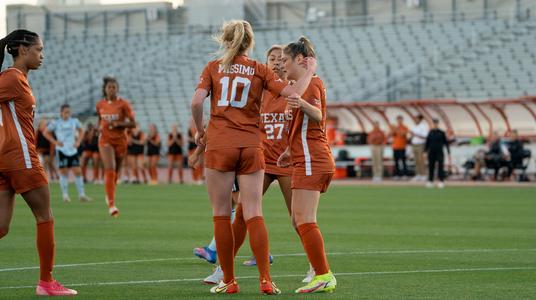
Key interviewees from the Raising Her Game docuseries provide insights into how past marginalizations of female athletes have given way to improved opportunities. Noted Title IX attorney Diane Henson, who filed the lawsuit that led to the establishment of the Longhorns’ soccer, softball, and rowing teams, explains the situation in which she grew up. Dr. Kelly McDonald Freeman, a former UT soccer All-American, weighs in on how things have evolved for female soccer players in the days since she finished her collegiate career. Current UT players also offer their perspectives on the change that has happened. NWSL goalkeeper Abby Smith suggests there’s a commercial aspect to the current setup that should command some attention, noting “if people are not getting into the business of women's soccer, like, they're losing out.”
 05:20
05:20Missimo Pronunciation Conundrum
When you’re an All-American soccer player, people say your name a lot. But why does everyone pronounce “Missimo” differently? We talked to family and teammates, but got widely divergent answers (sometimes from the same person in the same sentence). To try to find a solution to the pronunciation conundrum, we consulted some authorities – professors in the University of Texas Italian Studies department. This video shows the results of the investigation (sometimes hilariously).
 02:18
02:18Of Sports and Women’s Health
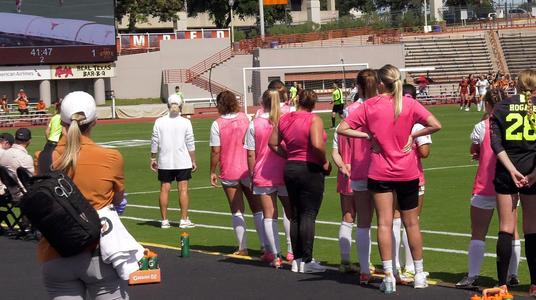
The women’s sports community sometimes comes together to acknowledge health matters relevant to their gender, like the breast cancer survivor recognition before a Texas Longhorns vs. Houston Cougars soccer game. Sports, including soccer, have had a meaningful effect on the evolution of how women are perceived in cultures and how their health issues are addressed. Longhorns players share their thoughts on the issue and what they’ve learned through their own experiences.
 02:37
02:371912 Thinking
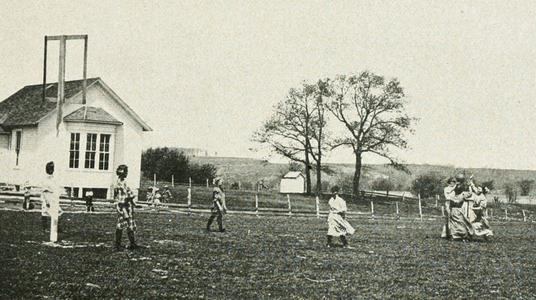
We wanted viewers to understand the way earlier generations viewed female participation in sports. We also wanted to involve players in the delivery of the information so they could learn along with the audience. A trip to a used bookstore yielded a copy of Public School Methods, assembled by editors and authors affiliated with the School Methods Company and published in 1912 by the Hanson–Bellows Company. We knew we’d discuss that era anyway with respect to developments around World War I, American football, and the 1917 arrival of Anna Hiss to lead women’s physical instruction at the University of Texas Austin. The book, designed to “meet the urgent needs of all teachers” instructing “the primary grades,” included a section called “Hygiene and Discipline.” This chapter included some observations on “Sports and Games,” which UT soccer player Sydney Cox read aloud and formed opinions therefrom. Let’s just say it was not a tome dedicated to female empowerment.
 01:39
01:39Abbreviations
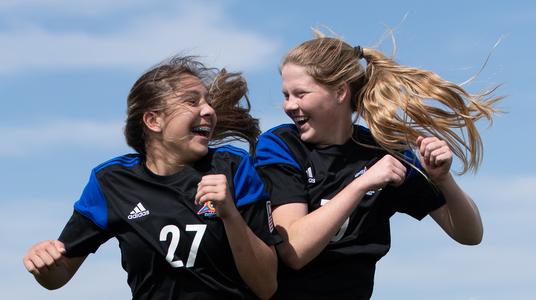
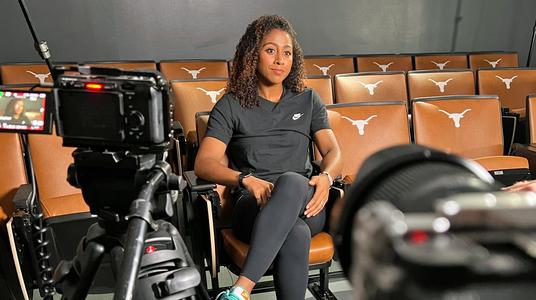
In an interview we did with Trinity Byars and Lexi Missimo together, we asked them about quirks the other possessed. Trinity noted that her friend tends to shorten words. Lexi acknowledged the habit. As we dug deeper, we found that their roommates had also taken note of her propensity to condense certain terms and they weren’t sure it was always merited. Does Lexi speak efficiently? Or does her use of abbreviations annoy her friends to no good end? Her teammates are not shy about expressing their opinions in this vid.
 02:20
02:20Abby Smith Pro Soccer Adjustment
Many, perhaps most, youthful athletes hope to play their sport professionally. Certainly many of the college players profiled in Raising Her Game harbor legitimate hopes of getting paid to play soccer. Former UT goalkeeper Abby Smith was a four-time All-Big 12 performer and made the transition to the NWSL. As we find out in the docuseries, her transition was by no means easy. In this short video, she starkly frames the challenges young players wwill face face as they attempt to enter the pro game.
 03:03
03:03Lexi And Ashlyn Meet Astro The Robot
During the course of shooting the Raising Her Game docuseries, we tried to bring players to places where they could learn about relevant themes so the audience could absorb that knowledge along with them. In December of 2023, Texas soccer standouts Ashlyn Miller & Lexi Missimo visited the Anna Hiss Gymnasium, a women’s gym built in the 1930s. It now houses Texas Robotics, and we learn that the current installation aims to provide women with opportunities in STEM pursuits the same way the facility’s original function provided an early breakthrough in sports. While on the tour, the players met a friendly robot named “Astro,” who impressed them with its ability to perform basic tasks while maintain a certain charm.
 01:11
01:11Diane Henson's Mia Hamm Story
Attorney Diane Henson filed the lawsuit that led to the establishment of the University of Texas’s soccer program, and worked on other suits seeking athletic opportunities for women. After she had finished speaking at an Austin event, a woman approached her. It turns out she appreciated what Henson had done for women’s sports opportunities. The lady then got her famous soccer-playing daughter on the phone to thank the lawyer personally.
 01:57
01:57Autographs
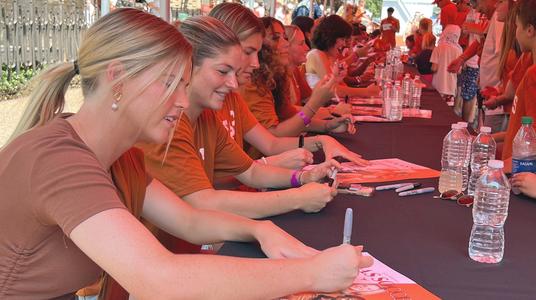
After most home games, members of the Texas Longhorns soccer team move to the east side of Mike A. Myers Stadium. There they autograph posters, balls, and shirts; take selfies; and mingle with the young fans who attended the match. They’ve been known to sign autographs before Texas football games, too. Players like Sydney Cox and Lexi Missimo relish the opportunity to engage with the younger generation. NWSL goalkeeper Abby Smith recalls how these current-day Longhorns used to be the ones seeking autographs, not signing them. The ritual is a sign of the progress of women in sport.
 01:53
01:53Ange Kelly and Mack Brown
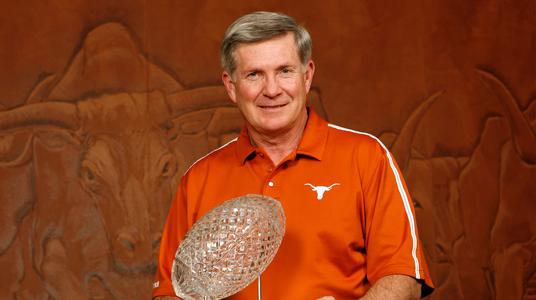
Texas Longhorns head soccer Ange Kelly considers North Carolina head football coach a “dear friend.” His first stint coaching at UNC coincided with Kelly’s time there as a player. Brown went on to coach the Horns from 1998 through 2013, winning a national title in 2005. His respect for female athletes, a quality by no means universal in make coaches of his generation, no doubt strengthened his bond with Kelly. In this video, she provides insights into his approach as a coach and a friend.
 02:43
02:43United Soccer Coaches
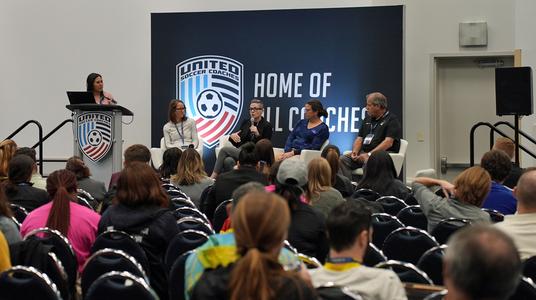
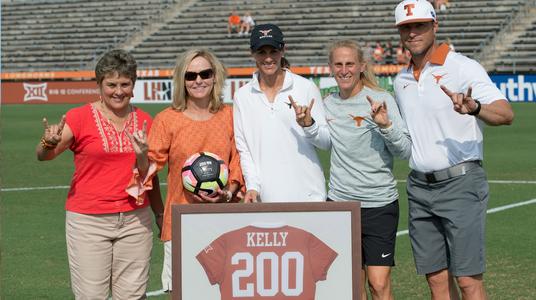
As the sport of soccer developed in the U.S., institutions had to be created to provide necessary infrastructure. Started in 1941 as the National Soccer Coaches Association of America, United Soccer Coaches has become a key factor in the development of the sport. As female soccer participation expanded, USC also had to determine how best to integrate it into their operation and nurture its growth. 2024 President Rusty Oglesby and Director of Education Programs Dave Simeone offer insight into what the association does and how it has made the women’s game a key part of its operation.
 03:52
03:52Women’s Rights and Soccer Evolution
The Raising Her Game docuseries explores topics relevant to women’s soccer, including how women like the ones at the University of Texas came to have the opportunity to play in the first place. Historically, obstacles to participation had to do with perceptions about imagined gender limitations. People didn’t think women mentally or physically tough enough to compete. RHG provides both the history of how these attitudes manifested themselves and how persistent female trailblazers overcame them then and continue to prove them wrong into the present day. We also look at the broader changes in societies that both effected, and were affected by, changes in the sports world. This video provides additional context through interview excerpts not seen in the main docuseries.
 01:58
01:58Goal Celebrations
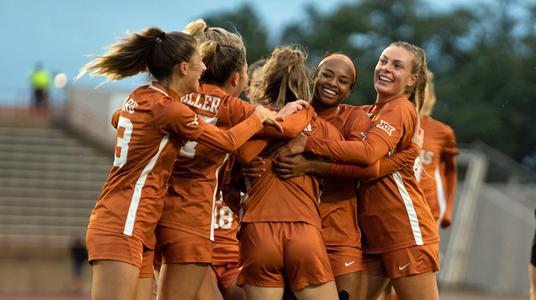
Scoring in a soccer game is a big deal. Texas goal machines Lexi Missimo and Trinity Byars have done it hundreds of times across their club and college careers. When they score, they, um, well, they don’t really do much of anything. Some players love to slide across the grass or run to the supporters. Lexi and Trinity tend to just trudge back toward the middle of the field to restart the game. Some feel they should party harder when the ball hits the back of the net, but Lexi and Trinity have their reasons, which include aspects of sportsmanship and, well, just trying to be cool.
 01:59
01:59Messiah and Derek Race
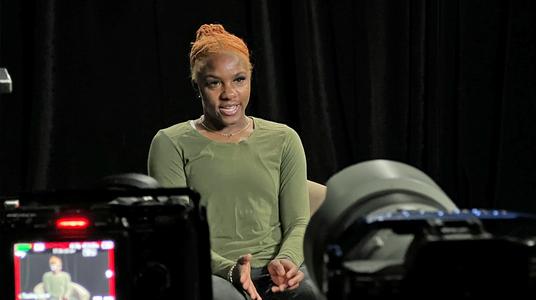
Messiah Bright played her club soccer for Derek Missimo at Solar Soccer Club before moving on to TCU for college and Orlando and Angel City in the NWSL. She played on teams with Missimo’s daughters, Lexi and Gabby, and remains tight with the family. However, on a certain Solar road trip, controversy ensued. Derek allegedly challenged Messiah and Lexi to a footrace. What happened next led to a result of questionable legitimacy . . .
 02:34
02:34Adrian Solca’s Southfork Story
Solar Soccer Club Technical Director Adrian Solca came of age under Nicolae Ceausescu’s dictatorial communist regime in Romania. Like many Romanians, he grew up loving both soccer and the TV program “Dallas.” Ceausescu had allowed the popular drama about the fictional Ewing family to be shown on state-run television. There’s a good case to be made that the decision backfired on him, as many believe exposure to the prosperous conditions the show depicted caused the citizens to question his brand of socialism. In any case, Ceausescu’s run as head of state did not survive the 1980s. When Solca immigrated to North Texas, he naturally wanted to see the ranch where the series was shot. He did not get to tell J.R. Ewing about his sport, but did make a soccer career for himself in the area that had fascinated him as a kid.